Pantry Notes
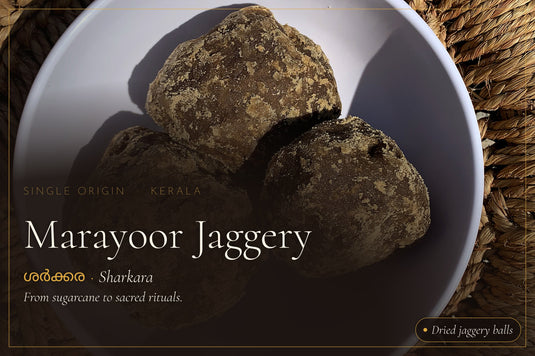
From sugarcane to sacred rituals, sweetness with a place of origin.
Marayoor Jaggery takes you on a historical journey, celebrates rich traditions, and delivers natural goodness in every bite. Originating from the serene hills of the Idukki district in Kerala, this jaggery is as unique as its story.
What Makes Marayoor Jaggery Special?
Marayoor Jaggery stands out for its high sugar content, ranging from 78% to 97%, with sucrose levels between 63% and 80%. This high sucrose concentration gives it an intense sweetness, making it a natural alternative to refined sugar. Its dark brown hue with golden flakes and the refreshing aroma of sugarcane make it a sensory delight.
Unlike other sweeteners, Marayoor Jaggery is non-salty and non-sour, celebrated for its pure sweetness and distinct flavour. It's not just a sweetener, it's an experience.
A Sweetener Steeped in Tradition
Picture this: ancient temples filled with the fragrance of incense, the sound of mantras echoing in the air. At the heart of these rituals lies Marayoor Jaggery. For centuries, this jaggery has been an integral part of Kerala's cultural and spiritual traditions.
- In Temples. Kerala temples incorporate Marayoor Jaggery in sacred ceremonies and rituals where it symbolizes purity and sanctity. It's a key ingredient in prasadams (offerings to deities), reflecting its revered status.
- In Homes. Beyond temples, Marayoor Jaggery is a staple in Kerala households. It adds depth to traditional dishes like sharkara upperi (jaggery-coated plantain chips) and festive feasts like sadya. Its unique flavour elevates everyday meals and special occasions alike.
This jaggery is woven so deeply into Kerala devotion that in 2002 the Kerala High Court directed Marayoor jaggery be used in the Aravana Payasam, the prasadam at Sabarimala. A sweetener written into temple practice by a court is a rare thing anywhere in the world.
A Sweetness Born of Nature
The secret to Marayoor Jaggery's exceptional quality lies in its roots, literally. Farmers in Marayoor and Kanthalloor cultivate sugarcane across 1,650 acres of fertile land to produce the renowned Marayoor jaggery. These regions enjoy a unique microclimate that's perfect for sugarcane cultivation.
- Rain Shadow Advantage. Nestled in a rain shadow area, Marayoor receives less rainfall than its surroundings. This ensures optimal conditions for sugarcane growth.
- Rich Soil. The soil here is rich in organic matter and phosphorus, enhancing the sugar content of the cane. This results in sugarcane with sucrose levels as high as 80%, giving Marayoor Jaggery its intense sweetness.
The production process remains traditional, with local farmers boiling sugarcane juice over wood-fired stoves to create jaggery balls. This artisanal method preserves its authenticity and flavour.
Marayoor sits in a rain shadow on the eastern slopes of the Western Ghats, a few ridges away from the wettest country in India. Less rain, cooler nights, and soils heavy with organic matter and phosphorus push the cane to store more sugar, which is how the sucrose climbs as high as 80 percent.
What We Call It
Jaggery has as many names as India has kitchens. In the south it is sharkara or vellam, in the north it is gud, and on the GI certificate this particular one is Marayoor Sharkara.
The word sharkara is far older than it looks. It travelled out of Sanskrit into Greek and Latin, and over centuries it became the English word sugar. So the next time you read sugar on a packet, you are reading a word that began its life describing exactly this, raw cane sweetness from the Indian subcontinent.
A Mythological Connection: The Mahabharata Link
The name "Marayoor" carries echoes of ancient Indian mythology. According to local legend, this region was the "place of hiding" for the Pandavas during their exile, as mentioned in the Mahabharata.
Historians and local legends trace the name "Marayoor" to the Malayalam term "Maranjirunnayoor," meaning "hidden place." The name perfectly describes this secluded region in Idukki district, Kerala, which lies 42 kilometres north of Munnar and features natural sandalwood forests.
This historical connection adds an intriguing layer to Marayoor Jaggery's story, making it not just a product but a piece of cultural heritage.
Single-Origin Sweetness: A Taste of Place
Like single-origin coffee or chocolate, Marayoor Jaggery embodies the essence of its birthplace. Marayoor's special soil composition, unique rain shadow climate, and centuries-old production techniques create a distinctive flavour profile that no other region can duplicate.
This connection to place resonates with today's conscious consumers who value authenticity and traceability. By choosing Marayoor jaggery, you're not just enjoying a sweetener, you are savouring a piece of Kerala's history and culture.
Preserving Tradition: The Role of the Muthuva Tribe
The Muthuva tribe plays a crucial role in preserving the traditional methods of producing Marayoor Jaggery. For generations, they have safeguarded this art form, ensuring that each batch reflects their dedication and expertise.
Marayoor Jaggery isn't just about sweetness, it is about stories, traditions, and authenticity. Whether you're using it to sweeten your tea or enhance your favourite dessert, this golden sweetener brings a touch of Kerala's rich heritage to your table.
So next time you savour the intense sweetness of Marayoor Jaggery, remember, you are tasting history, culture, and nature all at once. Browse our Marayoor jaggery, or explore the rest of the single origin collection.
From Our Shelf