


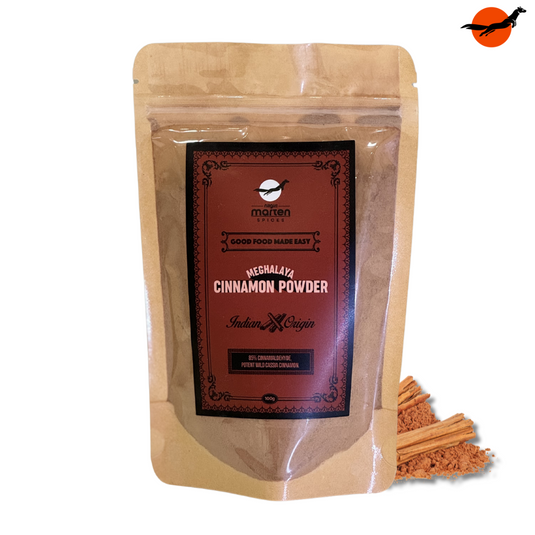
Meghalaya Cassia Cinnamon Powder | Indian Cinnamon (Dalchini), Single Origin
We will send you a notification as soon as this product is available again.
Guarantee safe and secure checkout
-
Estimated delivery: Oct 22 - Oct 26
-
Free return within 30 days of purchase.
Product description
The Bold Cinnamon, From Meghalaya’s Rain Soaked Hills
Nine in ten cinnamon sticks in the world are cassia, the bold, sweet, robust kind. This is the rare Indian one, ground from bark foraged in the Khasi and Jaintia Hills, where the rain almost never stops.
Cinnamaldehyde is the compound that gives cinnamon its flavour and aroma. The more of it, the bolder the cinnamon. Cassia carries far more than the delicate Ceylon kind, which is why most of the world cooks with it.
This is Meghalaya cinnamon, the bold and sweet kind known the world over as cassia, ground from bark grown in the hills of Northeast India. Whether you have only ever cooked with a generic jar marked cinnamon and want to know what is really in it, or you are after a cinnamon with enough character to stand up to chai, biryani and a tray of warm bakes, this is the single origin version, traced to one place and one harvest rather than blended from many.
The Place: The Wettest Hills on Earth
Meghalaya sits on the Shillong Plateau in Northeast India, a wall of green hills about fourteen hundred metres up that catches the full force of the monsoon off the Bay of Bengal. Two villages here, Mawsynram and Sohra, are among the wettest inhabited places on the planet, soaked by close to twelve thousand millimetres of rain a year. Sohra still holds the all time world record for a single year, more than twenty six thousand millimetres measured between 1860 and 1861. The British called it Cherrapunji, a clumsy version of the older Khasi name; Meghalaya gave it back its real name, Sohra, in 2007.
The cinnamon here is not a plantation crop. It grows wild and semi cultivated through the hill forests, foraged and tended by Khasi communities the way it always has been, organic by long habit rather than by certificate. The Khasi name for the tree is Dieng lorthia, and the constant rain, the mist and the altitude all slow its growth, which is part of what concentrates the warm, aromatic oils in its bark. Not farmed so much as found.
Cassia, Not Ceylon: Know Which Cinnamon You Have
There are two cinnamons in the world and they are not the same thing. Most people meet them already ground into a powder marked simply cinnamon, and never learn which one is in the jar. It is worth knowing.
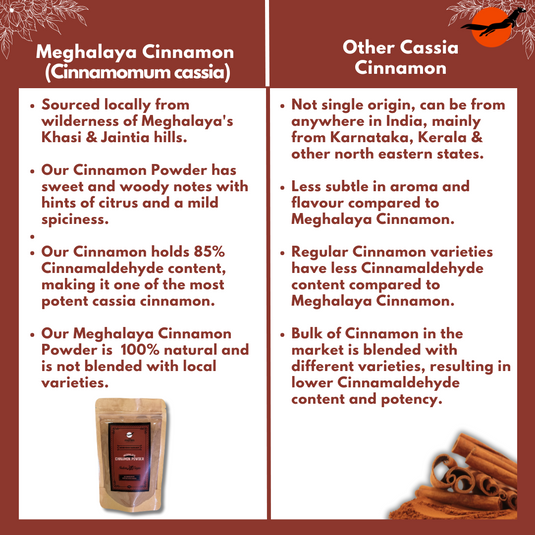
Cinnamomum verum, from Sri Lanka. Pale tan, thin papery layers rolled like a cigar. Delicate, light and citrus sweet, lower in cinnamaldehyde. The cinnamon for subtle desserts.
Cinnamomum cassia, from the Khasi hills. Bold, sweet and woody, dark reddish brown, ground from wild Indian bark. The everyday cooking cinnamon, single origin and traceable.
The same kind of cinnamon, grown in China, Vietnam and Indonesia. It makes up the bulk of the world’s commercial cinnamon, usually blended across origins into flat, one note powder.
From Bark to Powder: How It Is Made
- Foraged and coppiced. Branches are cut from wild and semi cultivated trees in the hill forests, leaving the tree to grow back, rather than clearing it.
- Peeled. The fragrant inner bark is stripped off in strips after the monsoon, when the damp makes it lift cleanly from the wood. The word cassia comes from an old root that means exactly this, to strip off bark.
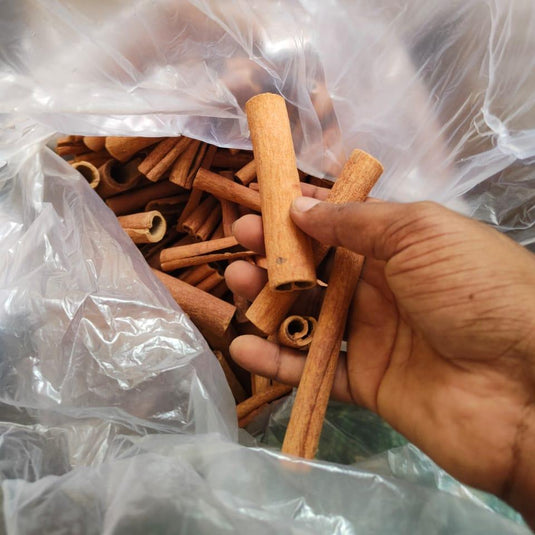
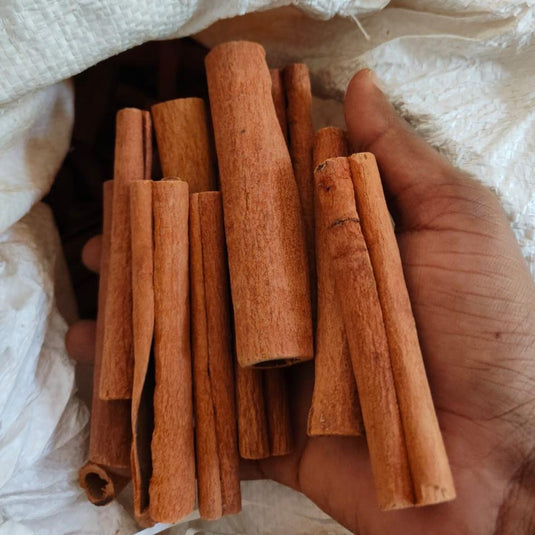
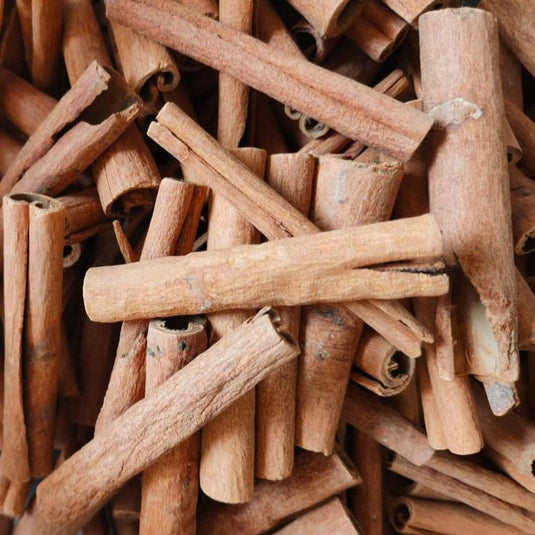
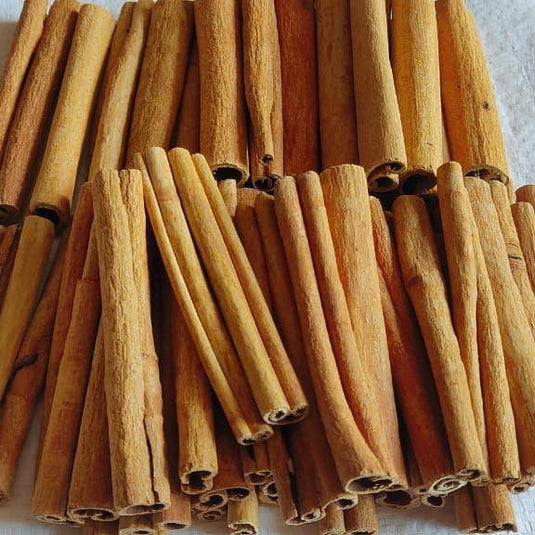
- Dried in the shade. The strips are dried slowly so they do not scorch, curling as they go into the hard, double curl quills that mark cassia apart from Ceylon’s soft single roll.
- Ground fresh. We mill the dried bark into a fine, even powder and seal it straight away, so the aromatic oils reach your kitchen rather than fading on a shelf.
Named for the knife, not the bird
For four thousand years cassia travelled the spice routes wrapped in deliberate myth. The Greek historian Herodotus wrote that giant birds carried cinnamon to nests on cliffs no person could reach, and that gatherers lured them down with chunks of meat so the nests would fall. Arab traders spread tales like this through the port of Alexandria to hide where the spice really came from and hold its price near gold, until the Roman scholar Pliny saw through the story. The truth was older and plainer. The word cassia comes from a Semitic root meaning to strip off bark, the exact act that makes it.
Why We Sell It Ground
We grind cassia to powder because that is how most kitchens actually use cinnamon, stirred into batter, folded into masala, whisked into chai, places a whole quill can never reach. Cassia bark is also hard and dense, far harder than brittle Ceylon, which makes it difficult to grind smooth at home; a clean mill gives an even, fine powder that blends without grit. We grind in small batches and seal it so the warm, sweet oils stay where they belong.
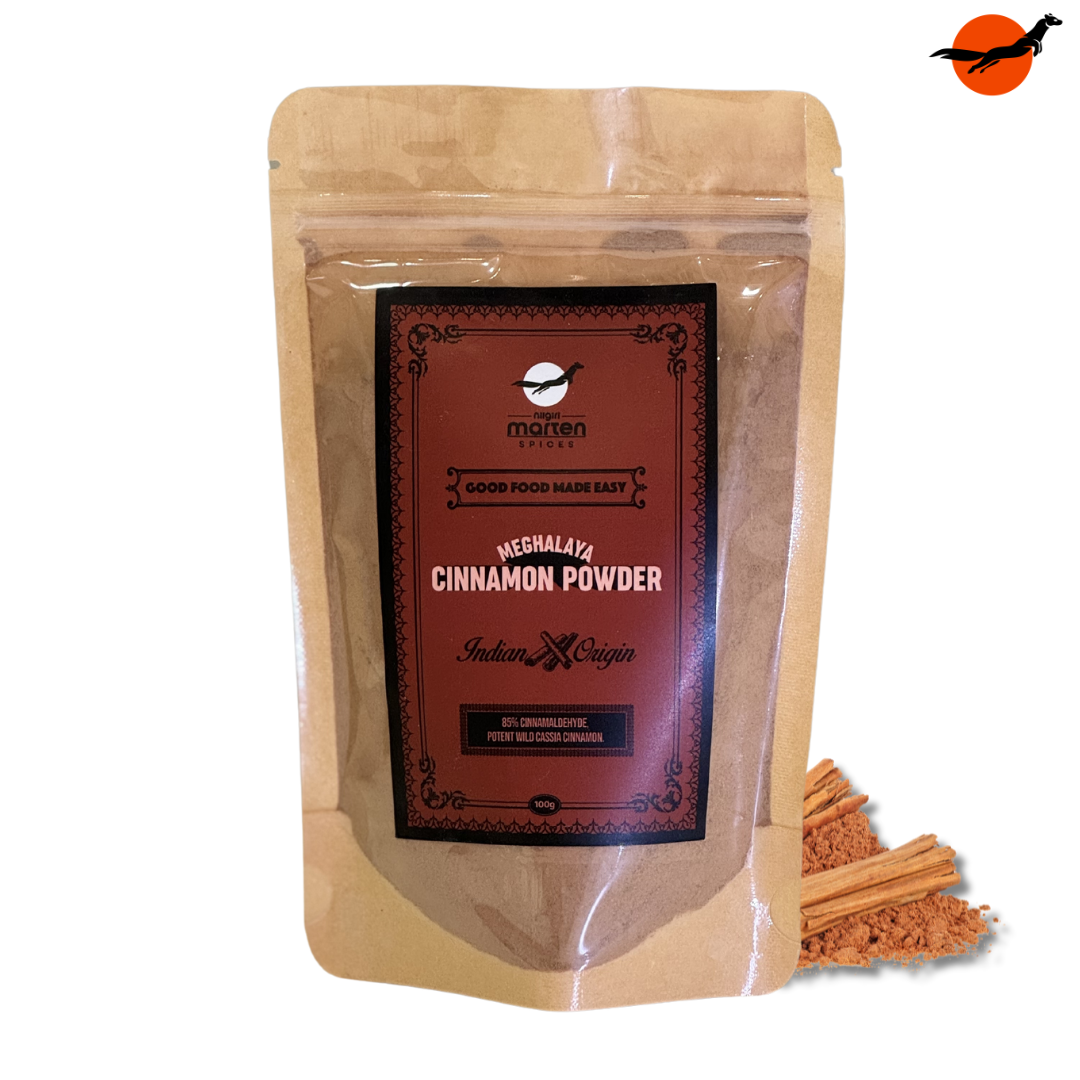
In a jar, cassia and Ceylon look almost alike, but cassia powder is a deeper reddish brown and smells louder and sweeter, while Ceylon is paler and gentler. The surest test is the label. If it does not say Ceylon or Cinnamomum verum, it is cassia, which is about nine in ten of all the cinnamon sold worldwide.
One Cinnamon, Three Ways
The cinnamon Indian kitchens reach for. A pinch in garam masala, a small piece bloomed in hot oil for biryani and pulao, or stirred straight into masala chai.
Bold enough to be felt. Cinnamon rolls, apple pie, banana bread and oatmeal cookies, anywhere you want the cinnamon to read clearly through the sweetness.
Mulled wine, spiced cider and a chai latte, or in long braises and spiced rice where cassia’s robust sweetness holds all the way through the cooking.
Why Choose Our Meghalaya Cinnamon
- Single origin. One cinnamon from the hills of Meghalaya, not a blend of mixed cassia pooled from many countries.
- Wild and foraged. Grown wild and semi cultivated in the hill forests, organic by long tradition, not raised on a plantation.
- Ground fresh. Milled from dried bark in small batches and sealed, so the warm, aromatic oils reach your kitchen.
- Bold by nature. The robust, sweet and woody cinnamon that stands up to chai, masala and warm bakes.
- Honest about what it is. Real cassia, the cinnamon most of the world cooks with, traced to one place rather than dressed up as something rarer.
The bold, everyday cinnamon, from the rainiest hills on earth.
| Type | Ground cinnamon (cassia), single origin |
|---|---|
| Origin | Khasi and Jaintia Hills, Meghalaya, Northeast India |
| Botanical name | Cinnamomum cassia, also called Cinnamomum aromaticum |
| Also called | Dalchini (Hindi), Dieng-lorthia and Dieng-siasa (Khasi) |
| Kind of cinnamon | Cassia, not Ceylon (Cinnamomum verum) |
| Flavour | Bold, sweet and woody, with a gentle citrus warmth |
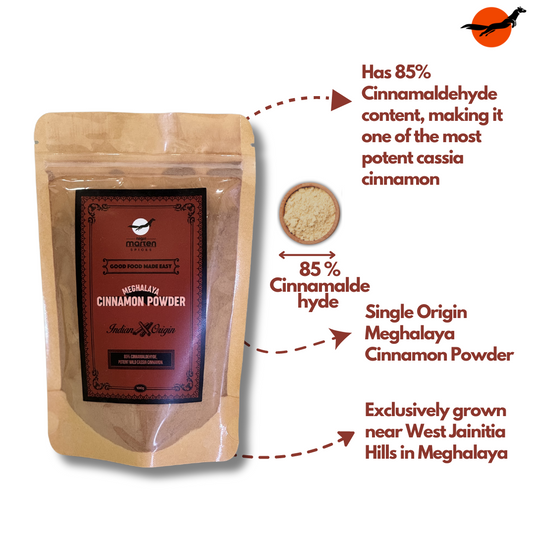
| Cinnamaldehyde | High, about 85% of the bark oil, the source of its bold flavour |
| Form | Fine ground powder |
| Best for | Chai, garam masala, biryani, curries, warm bakes, mulled drinks |
| GI status | No GI; single origin and traceable to Meghalaya |
| Packs | 20g, 100g, 250g, 500g and 1kg |
About our Meghalaya cinnamon
Is this Ceylon cinnamon or cassia?
How is cassia different from Ceylon in cooking?
How can I tell cassia from Ceylon?
Where does it come from?
Is it whole sticks or powder?
Does it have a GI tag?
What does it taste like?
How should I store it, and how long does it keep?
Additional information
| Name | Meghalaya Cassia Cinnamon Powder | Indian Cinnamon (Dalchini), Single Origin |
|---|---|
| SKU | NMS0007-A |
| Vendor | Nilgiri Marten Spices |
| Weight | 20g, 100g, 250g, 500g, 1kg |
Shipping & return
Shipping
- Dispatch within 24 hours of order confirmation
- Free shipping on all orders above ₹1000 within India
- Flat ₹90 shipping on orders below ₹1000
- Delivery within 2 to 5 business days across India
- International delivery available, 7 to 14 business days depending on destination
- Cash on Delivery available on select pin codes at checkout
Returns and Exchanges
We pack every order with care and ship fresh from our Wayanadu warehouse. If something is not right, we will make it right.
- Damaged, expired, or incorrect items are eligible for replacement or refund within 7 days of delivery
- Notify us within 24 hours of delivery at aswinpk@nilgirimarten.com or WhatsApp +91 97783 07321
- Share a photograph of the damaged product and the outer packaging to help us process your claim quickly
- We do not accept returns on opened or used products, which is standard for food and spice products under FSSAI regulations
- Refunds are processed within 7 business days of return confirmation to the original payment method
- Return shipping costs are covered by us for damaged or incorrect items. For other returns, return shipping is the buyer's responsibility
Tracking and Delivery
You will receive a tracking link via email and SMS once your order ships. Deliveries are made Monday through Saturday. If you are unavailable, our courier will attempt delivery up to three times before returning the parcel. For any delivery issues, reach out to us on WhatsApp and we will coordinate directly with the courier.
International Orders
We ship to most countries worldwide. International customers are responsible for any customs duties or import taxes charged by their country. Please ensure your shipping address and contact details are accurate at checkout.