


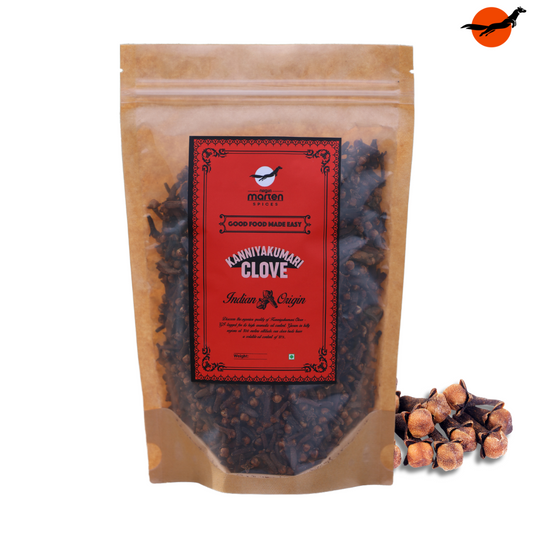
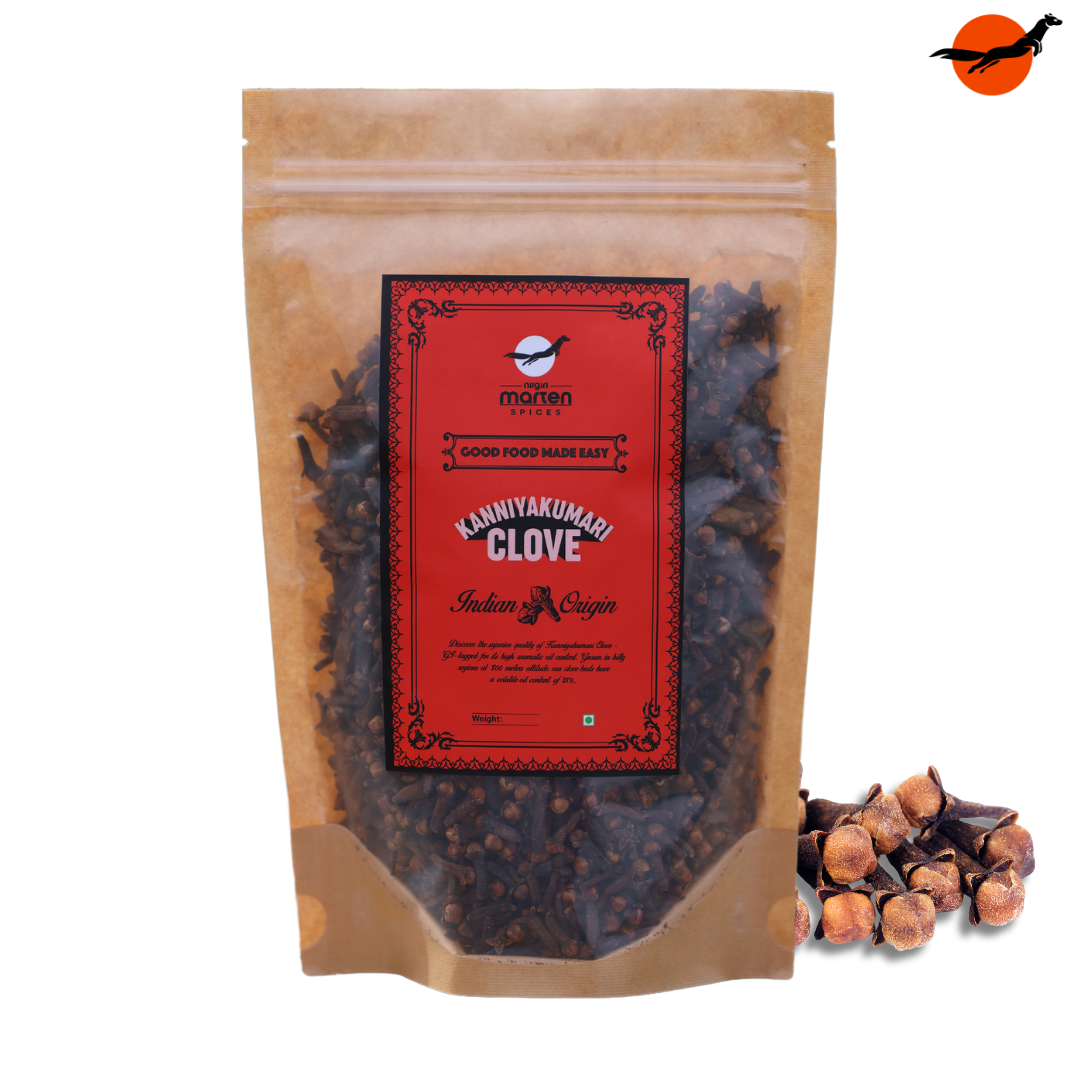
Kanniyakumari Cloves, Whole (GI) | Laung, High Oil Single Origin
We will send you a notification as soon as this product is available again.
Guarantee safe and secure checkout
-
Estimated delivery: Oct 24 - Oct 28
-
Free return within 30 days of purchase.
Product description
The High Oil Clove From the Hills of Kanniyakumari
Clove is not Indian by birth. It crossed half the world to get here, and on the twin monsoon hills at India’s southern tip it found a home that fills each bud with more oil than almost any clove in the country.
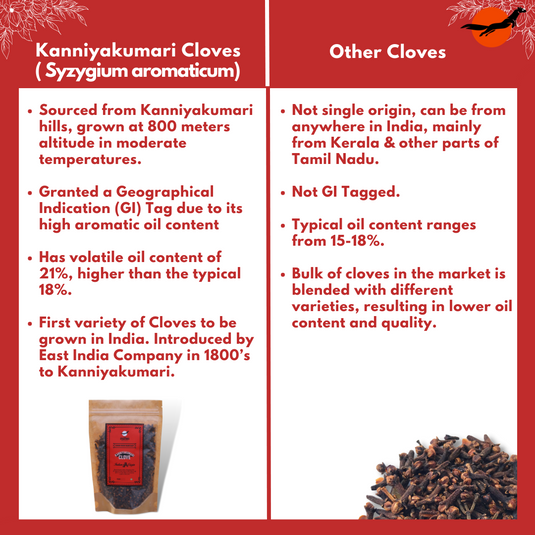
Volatile oil is the fragrant essence held in the bud, and eugenol is the compound behind clove’s warm, sweet aroma. More oil per bud means more of that scent, and Kanniyakumari’s cloves carry well above the roughly eighteen percent that Indian cloves average.
This is the Kanniyakumari clove, the warm, sweet spice a kitchen reaches for at Onam and at Christmas, in a pot of biryani and in a cup of spiced tea. It grows high in the reserve forests at the very tip of India, hand picked as unopened buds and dried slowly in the hill air. Whether you want a clove with real aroma rather than a tired, hollow one, or you simply like knowing where your spice comes from, this gives you a single origin bud with the oil still locked inside it.
The Place: Kanniyakumari, Where the Ghats Meet the Sea
Kanniyakumari is the last district of mainland India, the point where the Western Ghats run down to the southern ocean. Clove grows high in its forests, in the densely wooded Maramalai, Blackrock and Velimalai ranges inside the Veerapuli Reserve, and on the slopes of Mahendragiri. This one district grows close to sixty five percent of all the cloves in India, and Tamil Nadu as a whole accounts for around three quarters of the country’s clove land.
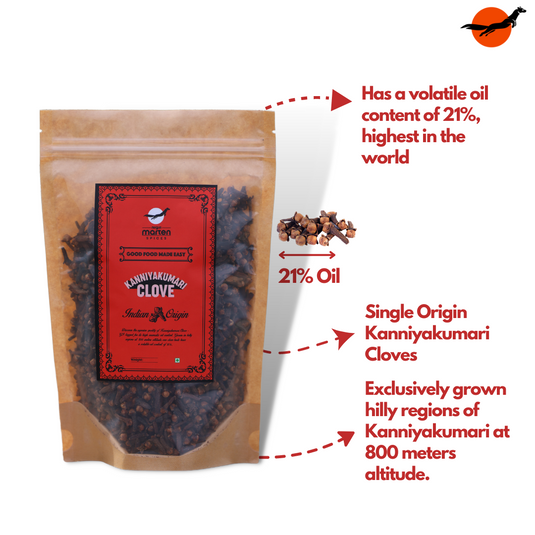
What sets the place apart is its weather. Kanniyakumari catches both the south west and the north east monsoon, so the hills stay watered through much of the year, over deep, humus rich forest soil. The buds dry naturally on the plantations at around eight hundred metres, where the air is moderate rather than fierce, so less of the fragile oil escapes. That slow, cool dry is the reason these cloves carry about twenty one percent volatile oil, against the roughly eighteen percent that Indian cloves average.
Where the World’s Cloves Come From
Almost no clove is local to where it is sold. The spice grows on only a few corners of the world, and where it is from changes how it smells. It is worth knowing the map before you buy.
The Tanzanian islands that grew rich on smuggled clove became the world’s clove capital in the nineteenth century, and their name is still spoken as a benchmark for aroma.
India’s Geographical Indication clove, grown high in the Western Ghats and carrying about twenty one percent volatile oil, among the highest in the country.
The volcanic Spice Islands where clove first grew, and still the largest producer, though most of that crop is smoked at home in clove cigarettes.
From Bud to Jar: How It Is Made
- Grown slowly. A clove tree begins to flower only around its fifth or sixth year, and does not reach full bearing until about fifteen, which is part of why good cloves are never cheap.
- Picked as buds. The spice is an unopened flower bud. It is hand picked when it turns from green to pink, just before it would open, because an opened flower is no use as a clove.
- Sun dried. The buds are spread to dry for several days until they harden and turn a deep brown. As they lose water the oil concentrates, and the aroma grows strong enough to carry on the air.
- Cleaned and packed whole. Stalks and debris are removed and the buds are sorted, then sent to you whole rather than ground.
The oil is in the bud
A clove’s scent is almost entirely one compound, eugenol, and in Kanniyakumari buds it makes up about eighty six percent of the volatile oil. The reason these cloves hold so much of it is the hill itself. Moderate temperatures and a slow, natural dry mean less oil evaporates, so more of the eugenol stays sealed in the bud until you crush it. That is the warm, sweet, faintly numbing note of clove, and you get more of it from every bud.
Why We Sell Whole Buds, Not Powder
Ground clove fades fast. Grinding opens every surface to air, and the volatile oil that makes clove worth buying begins to leave at once, so a tin of clove powder is often half gone in scent before it is opened. A whole bud keeps its oil sealed in until the moment you crush or grind it. Buy it whole, grind small amounts as you need them, and what reaches your pot still smells the way clove is meant to.
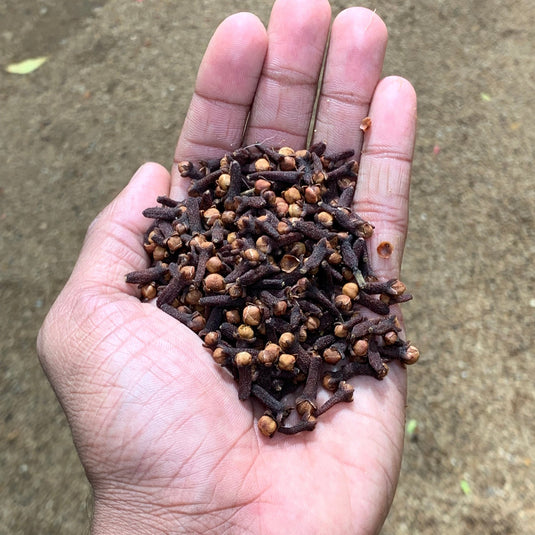
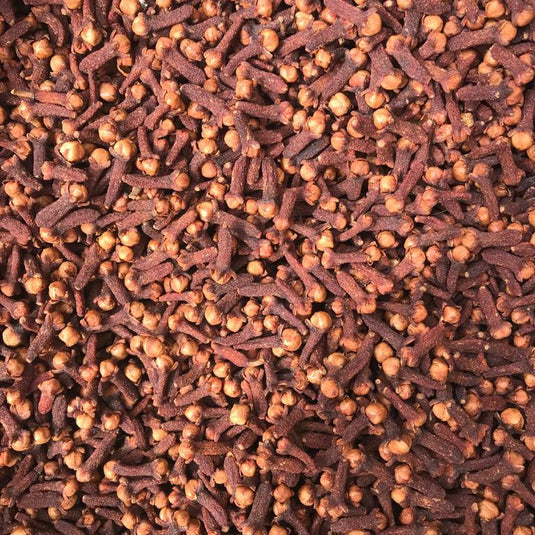
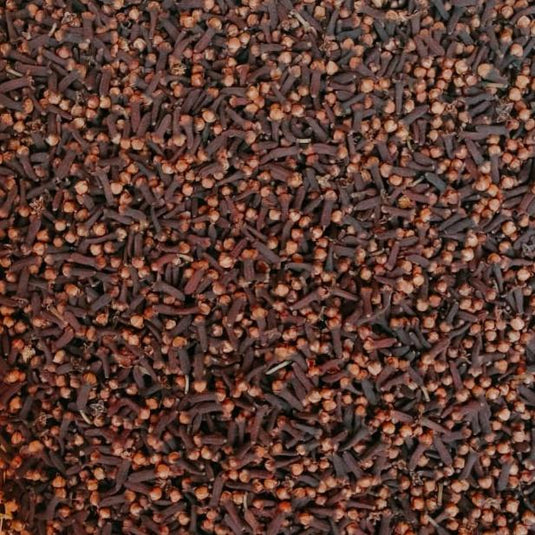
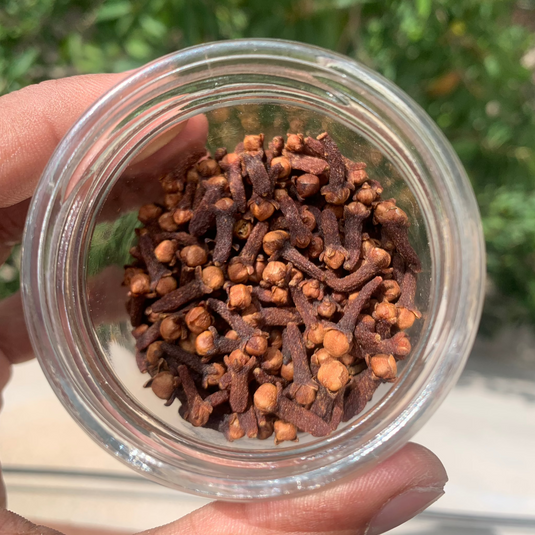
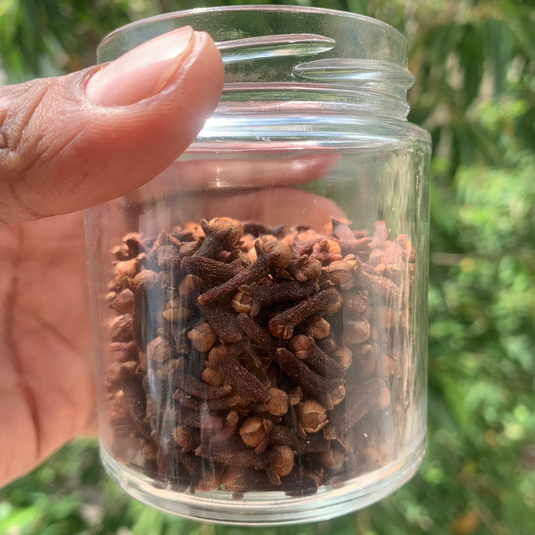
What you hold is a flower. The slender nail is the bud’s stalk and calyx, and the little round head at the top is the unopened flower itself. Most of the oil sits in that head, which is why a clove with its head still on, rather than a bare broken stalk, is the one with the aroma.
One Clove, Three Ways
Drop two or three buds into hot ghee or oil at the start of a biryani, a pulao or a meat curry, and let them swell and perfume the fat before anything else goes in.
Grind fresh into a garam masala or a chai masala, or into cakes, mulled wine and spiced syrups, where one pinch of real clove does the work of a spoonful of stale.
Add a few whole to a rasam, a stock, a biryani or a jar of pickle, where they steep slowly and lift the whole dish without taking it over.
Why Choose Our Kanniyakumari Cloves
- Single origin. From the reserve forest hills of Kanniyakumari, not pooled from many sources.
- GI tagged. Registered as a Geographical Indication by the Government of India, as Kanyakumari Clove.
- High in oil. About twenty one percent volatile oil, well above the Indian average, for a stronger, sweeter aroma.
- Sold whole. Hand picked buds rather than powder, so the oil and the scent stay in.
- Honest by nature. Just cloves, sun dried, with no oil stripped out and nothing added.
The warm, sweet spice of festival kitchens, traced to the hills that grow most of India’s cloves.
| Type | Whole dried clove buds, Kanniyakumari Clove |
|---|---|
| Origin | Maramalai and Velimalai hills, Kanniyakumari district, Tamil Nadu |
| Botanical name | Syzygium aromaticum |
| Also called | Laung (Hindi), Kirambu (Tamil) |
| GI status | Registered Geographical Indication, Kanyakumari Clove |
| Volatile oil | About 21 percent, among the highest in Indian cloves |
| Aroma | Eugenol, about 86 percent of the oil, warm and sweet |
| Best for | Biryani, pulao, garam masala, chai, baking, rasam, pickles, mulled drinks |
| Packs | 20g, 100g, 250g, 500g and 1kg |
About our Kanniyakumari cloves
What makes Kanniyakumari cloves different?
Are these whole cloves or ground?
Where are they grown, and why does it matter?
Is Kanniyakumari clove really GI tagged?
What does the volatile oil figure mean for cooking?
How do I cook with whole cloves?
How should I store cloves to keep the aroma?
What part of the clove plant is the spice?
Additional information
| Name | Kanniyakumari Cloves, Whole (GI) | Laung, High Oil Single Origin |
|---|---|
| SKU | NMS0003-A |
| Vendor | Nilgiri Marten Spices |
| Weight | 20g, 100g, 250g, 500g, 1kg |
Shipping & return
Shipping
- Dispatch within 24 hours of order confirmation
- Free shipping on all orders above ₹1000 within India
- Flat ₹90 shipping on orders below ₹1000
- Delivery within 2 to 5 business days across India
- International delivery available, 7 to 14 business days depending on destination
- Cash on Delivery available on select pin codes at checkout
Returns and Exchanges
We pack every order with care and ship fresh from our Wayanadu warehouse. If something is not right, we will make it right.
- Damaged, expired, or incorrect items are eligible for replacement or refund within 7 days of delivery
- Notify us within 24 hours of delivery at aswinpk@nilgirimarten.com or WhatsApp +91 97783 07321
- Share a photograph of the damaged product and the outer packaging to help us process your claim quickly
- We do not accept returns on opened or used products, which is standard for food and spice products under FSSAI regulations
- Refunds are processed within 7 business days of return confirmation to the original payment method
- Return shipping costs are covered by us for damaged or incorrect items. For other returns, return shipping is the buyer's responsibility
Tracking and Delivery
You will receive a tracking link via email and SMS once your order ships. Deliveries are made Monday through Saturday. If you are unavailable, our courier will attempt delivery up to three times before returning the parcel. For any delivery issues, reach out to us on WhatsApp and we will coordinate directly with the courier.
International Orders
We ship to most countries worldwide. International customers are responsible for any customs duties or import taxes charged by their country. Please ensure your shipping address and contact details are accurate at checkout.